

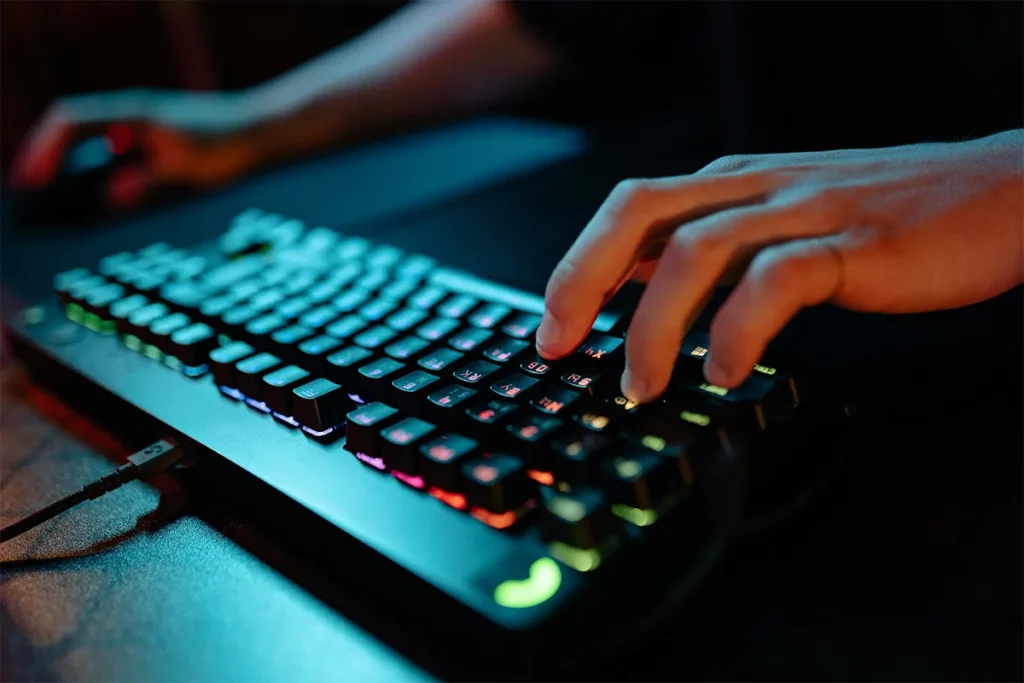
Gaming has changed a lot in recent years. Every other gaming equipment has been updated to the latest and fastest technology. Similar is the case with keyboards. These 10 best low-profile Hall Effect keyboards for gaming are made using magnets and sensors. It makes them the fastest keyboard until now. They are best for gamers who play games at a fast pace, like Counter-Strike and even PUBG, on their desktop.
The magnetic sensors significantly reduce the response time, which directly improves your gaming experience. The slim and low-profile Hall Effect keyboards not only enhance your gaming, but they also look very stylish on your desk. The low-profile keyboards are easy to use, and they do not make your wrists tired when playing games for a long time.
The problem is, there are multiple options available in the market, and all of them claim they are the best. It becomes difficult for the buyers to find the perfect one with strong built quality. Here in this post, we have enlisted only the trusted brands with reputable performance and reviews.
7 Best Low Profile Hall Effect Keyboards for Gaming 2026
The low-profile magnetic switch gaming keyboard market is small on purpose. Building Hall Effect sensors into a low-profile chassis is harder than it sounds, and most brands have not bothered yet. The seven keyboards below are the only true options available. Each one earns its place.
1. NuPhy Air75 HE
This is the one to buy. Full stop. The Air75 HE sits just 12.8mm to 18.4mm tall, uses Gateron Magnetic Jade switches, and hits a true 8000Hz polling rate with 0.1ms response time. Actuation is adjustable from 0.1mm all the way to 3.3mm, so you can set your WASD keys to hair-trigger sensitivity in Counter-Strike and leave everything else at a normal depth. NuPhyIO, their web-based software, is clean and fast to navigate.
The 75% layout is the real reason this keyboard sits at the top. You get arrow keys, a function row, and a navigation cluster. That matters when you switch between gaming and actual work. The aluminum top case is solid, the adjustable kickstand gives you three typing angles, and the pre-lubed stabilizers mean the spacebar does not sound like a loose cabinet door. Across PC Gamer, RTINGS, Tom’s Guide, and dozens of community threads, the Air75 HE is the best low-profile keyboard for competitive gaming in 2026. Nothing else comes close right now.
Pros:
- True 8,000 Hz polling rate
- Adjustable actuation per key
- 75% layout with arrow keys
- Excellent NuPhyIO web software
- Premium aluminum top case
Cons:
- No wireless connectivity
- Limited low-profile switch options
- Wired cable exits from the back
- Plastic bottom case
- ABS keycaps, not PBT
2. NuPhy Air60 HE
The Air60 HE was the first low-profile Hall Effect keyboard ever sold to the mass market. That is not marketing. That is a genuine world first. Same Gateron Magnetic Jade switches as the Air75 HE. Same 8000Hz polling. Same 0.1ms response time. The chassis measures 13.5mm to 18.8mm tall with a full aluminum top frame. If you want the smallest possible footprint and your mouse needs every centimeter of pad space, this is the one.
The trade-off is real. No arrow keys. No function row. No navigation cluster. You use FN layers for all of it, and that takes adjustment, especially if you run macros or switch apps constantly while gaming. Outside of that friction, the Air60 HE performs nearly identically to the Air75 HE. PC Gamer called it one of the finest gaming keyboards money can buy. KitGuru gave it a 9.0, and reviewers consistently point to the Hall Effect vs mechanical keyboard performance gap as the main reason scores like that keep appearing for low-profile Hall Effect boards. For a compact setup that still wants an affordable Hall Effect keyboard with a rapid trigger, this delivers everything that matters.
Pros:
- World’s first low-profile HE keyboard
- Same switches as Air75 HE
- Maximum desk space for the mouse
- 8,000 Hz true polling rate
- Excellent NuPhyIO web software
Cons:
- No wireless connectivity
- The USB-C port is on the left side
- No arrow or function keys
- Spacebar sounds slightly wobbly
- Limited low-profile switch options
3. Logitech G515 Rapid TKL
Logitech is the only household name on this list. The G515 Rapid TKL is 22mm tall, uses a stainless steel top plate, ships with double-shot PBT keycaps, and runs Logitech’s own magnetic analog switches. G HUB handles setup. It is not the most powerful software on this list, but it is the most familiar, and that counts for something when you just want to plug in and play. Actuation adjusts from 0.1mm to 2.5mm with rapid trigger and SOCD support built in.
The 2.5mm max travel is a real ceiling. NuPhy keyboards go to 3.3mm, which gives you more range for per-key customization. The G515 Rapid TKL is also wired only, which is true of most Hall Effect keyboards, but still worth knowing. What you get in return is Logitech’s build quality, global retail availability, and a software ecosystem that millions of people already know. It is the most recognized low-profile gaming keyboard with adjustable actuation you can walk into a store and buy today.
Pros:
- Widely available in retail stores
- Polished G HUB software experience
- Double-shot PBT keycaps included
- Stainless steel top plate
- Trusted mainstream brand globally
Cons:
- No wireless connectivity at all
- Travel is limited to 2.5 mm only
- Plastic chassis, not aluminum
- No dedicated media controls
- Most expensive on this list
4. Keychron K3 HE
Every other keyboard on this list is wired only. The Keychron K3 HE is not. It launched in February 2026 with 2.4GHz wireless, Bluetooth, and USB-C wired support. That is a genuine differentiator in a category where wireless Hall Effect is almost unheard of. It runs Keychron’s Ultra-Fast Lime Low Profile switches with Hall Effect sensing, supports rapid trigger and adjustable actuation, and works with both QMK and Keychron’s web app for customization.
One honest limitation: wireless mode caps at 1kHz polling, not 8kHz. For casual and mid-level competitive gaming, that is not a problem. For top-level ranked play where every millisecond matters, you will want a cable anyway. The rosewood frame accents make this keyboard look genuinely different from every other option here. Keychron has a loyal global community and strong after-sales support, which adds real peace of mind. For anyone who needs a wireless, low-profile Hall Effect keyboard for gaming, this is currently the only option that exists.
Pros:
- Only wireless option available
- 2.4 GHz and Bluetooth support
- QMK and web app support
- Rosewood accents look distinctive
- Rapid trigger and SOCD included
Cons:
- Polling rate capped at 1,000 Hz
- Very short 55-hour battery life
- Switch travel limited to 2.9 mm
- Not yet widely reviewed globally
- Software is still maturing post-launch
5. MelGeek Made68 Air
MelGeek built their first low-profile Hall Effect keyboard and made it memorable. The Made68 Air uses TTC Mini Magneto low-profile switches, weighs just 630 grams, and features an RGB lightbox design that no other keyboard on this list comes close to visually. Total keystroke distance is 2.8mm. Rapid trigger, Snap Tap, and HIVE software customization are all included. The 65% layout hits a practical sweet spot: arrow keys are there, the layout is compact, and the board fits in a laptop bag without drama.
The weak point is HIVE, MelGeek’s software. It works. All the features are accessible. But compared to NuPhyIO or Keychron’s Launcher, the interface takes more patience to navigate. If you spend a lot of time dialing in per-key actuation settings, that friction adds up. Still, for a gamer who travels regularly and wants a low-profile Hall Effect keyboard for travel and portability, the Made68 Air is genuinely hard to beat. It is light, capable, and the only keyboard here that turns heads at a LAN event.
Pros:
- Weighs only 630 grams
- Distinctive RGB lightbox design
- 65% layout includes arrow keys
- Hot-swappable low-profile switches
- Rapid trigger and Snap Tap included
Cons:
- HIVE software is less intuitive
- ABS keycaps will shine over time
- No wireless connectivity
- Narrower switch compatibility options
- Smaller community and support base
6. Keydous AJ68-CP
The AJ68-CP has a full CNC aluminum alloy chassis. At this level, that is not common. It uses Gateron Jade Low Profile magnetic switches, adjustable actuation from 0.1mm to 3.3mm, 8000Hz polling with 0.125ms response, and a 32kHz PCB scanning rate. There is also a storage compartment built into the back of the case, which is a practical detail that nobody asked for and everyone quietly appreciates. Hot-swap sockets let you swap switches without a soldering iron.
Software is where this keyboard stumbles. The web driver supports rapid trigger, DKS, Snap Tap, and ModTap, but the interface is clunky and less intuitive than NuPhy or Keychron. You will figure it out. It just takes longer than it should. Keydous also carries less brand recognition than the other names on this list, which affects resale value and community support. For a gamer who wants the best possible build quality in a budget low-profile Hall Effect keyboard with a metal case and does not mind spending extra time in the software, the AJ68-CP delivers real value.
Pros:
- Full CNC aluminum alloy chassis
- 32,000 Hz PCB scanning rate
- Hot-swappable switch sockets included
- Built-in case storage compartment
- Adjustable actuation from 0.1 to 3.3 mm
Cons:
- The web driver interface is clunky
- Lower brand recognition globally
- Fixed typing angle, no adjustment
- Sound profile needs modding improvement
- Weaker community and documentation
7. ZENAIM Keyboard TKL
This one started it all. The ZENAIM Keyboard TKL was the first low-profile keyboard in the world to use non-contact magnetic sensing, developed by Tokai Rika, a Japanese company that makes switches for cars. Automotive-grade magnetic sensing technology in a keyboard sounds absurd. The result is a 1.9mm total travel keyboard with actuation adjustable from 0.1mm to 1.8mm in 0.05mm increments, a Motion HACK rapid trigger system, temperature correction, and cloud-based profile saving.
The keyboard launched in Japan first and only became broadly available on Amazon US later. Global brand recognition is still limited, and the enthusiast community outside Japan is smaller than NuPhy or Keychron’s. The actuation ceiling of 1.8mm is also lower than that of every other keyboard on this list. That is a deliberate design choice for ultra-fast inputs, but it does reduce flexibility. For a gamer who wants to own the premium Japanese low-profile Hall Effect keyboard that technically started the low-profile Hall Effect movement, the ZENAIM is one of a kind.
Pros:
- Pioneer of low-profile HE keyboards
- Automotive-grade magnetic sensing technology
- Actuation adjustable in 0.05 mm increments
- Cloud-based profile saving is included
- Temperature correction technology is built in
Cons:
- Most expensive keyboard on this list
- Travel ceiling limited to 1.8 mm only
- Very limited global availability
- Proprietary switches cannot be replaced
- Small international community support
Low Profile Hall Effect Keyboards for Gaming at a Glance
| Keyboard | Layout | Switch | Key Travel | Polling Rate | Wireless | Connectivity | Case | Best For | Price |
|---|---|---|---|---|---|---|---|---|---|
| NuPhy Air75 HE | 75% | Gateron Magnetic Jade LP | 0.1–3.3 mm | 8,000 Hz | No | USB-C | Aluminum top | Best overall pick | $129.95 |
| NuPhy Air60 HE | 60% | Gateron Magnetic Jade LP | 0.1–3.3 mm | 8,000 Hz | No | USB-C | Aluminum top | Max desk space, FPS | $119.95 |
| Logitech G515 Rapid TKL | TKL (80%) | Logitech Magnetic Analog | 0.1–2.5 mm | 8,000 Hz | No | USB-C | Steel top + plastic | Big-brand familiarity | $169.99 |
| Keychron K3 HE | 75% | Keychron Ultra-Fast Lime LP | 0.1–2.9 mm | 1,000 Hz (wired and wireless) | Yes | 2.4 GHz, BT, USB-C | Aluminum top + rosewood | Only wireless option | ~$119.99 |
| MelGeek Made68 Air | 65% | TTC Mini Magneto LP | 0.1–2.8 mm | 8,000 Hz | No | USB-C | Semi-aluminum | Travel and portability | $139.00 |
| Keydous AJ68-CP | 65% | Gateron Jade LP | 0.1–3.3 mm | 8,000 Hz | No | USB-C | Full CNC aluminum | Best build quality | $135.99 |
| ZENAIM Keyboard TKL | TKL (80%) | ZENAIM KEY SWITCH LP | 0.1–1.8 mm | N/A (proprietary) | No | USB-C | Aluminum | Pioneer, ultra-short travel | $299.00 |
Buying Guide: How to Choose a Low Profile Hall Effect Keyboard
You do not need every feature on a spec sheet. You need the right features for how you actually play. Before buying, get clear on three things: your layout needs, your software patience, and whether you need wireless. Everything else follows from those decisions.
- Switch travel distance: Low-profile Hall Effect switches give you 1.9mm to 3.3mm of total travel. That is shorter than standard switches. The ZENAIM tops out at 1.8mm. NuPhy and Keydous go to 3.3mm. More range means more flexibility for per-key tuning.
- Polling rate: Look for a low-profile keyboard with an 8000Hz polling rate if you play at a high level. Most wired options here hit 8kHz. The Keychron K3 HE drops to 1kHz in wireless mode.
- Actuation range: Per-key adjustment is the point of the Hall Effect. Make sure the keyboard you choose supports it. Setting WASD to 0.2mm and your spacebar to 1.5mm changes how the game feels.
- Rapid trigger support: Every keyboard on this list has it. Rapid trigger lets a key reset mid-travel the moment you start lifting, which is the feature that makes Hall Effect keyboards for gaming worth buying over mechanical alternatives across all form factors.
- Software quality: NuPhy and Keychron have the cleanest web apps. Keydous and ZENAIM work but require more patience. If you change settings often, software quality matters more than you think.
- Layout size: A 75% layout gives you arrow keys and a function row. A 65% gives you arrows but no function row. A 60% gives you maximum space and maximum inconvenience. Pick based on what you actually use.
- Wireless or wired: Hall Effect switches draw more power than Bluetooth handles cleanly at high polling. The Keychron K3 HE solves this with 2.4GHz wireless. Every other keyboard here is wired.
- Build quality and materials: Aluminum top cases resist flex and feel solid. Plastic bottoms are standard and fine. The Keydous AJ68-CP is the only full aluminum chassis in this group.
Start with your layout. Then check the software. Then decide on wireless. By the time you work through those three filters, your list will be short, and your decision will be clear.
Conclusion
Low-profile Hall Effect keyboards are rare because they are hard to build well. The seven on this list are the only ones that actually exist in 2026, and each one was built by a brand that made deliberate engineering choices to get there. Whether you pick the NuPhy Air75 HE for its complete feature set or the ZENAIM for its mechanical originality, you are getting a keyboard that sits at the edge of what is currently possible in this category.
The market will grow, and as peer-reviewed research confirms that Hall Effect magnetic sensor accuracy keeps improving through advances in silicon fabrication and offset cancellation, more brands will find the engineering confidence to enter this category. More brands will enter. Prices will come down, and options will expand. But right now, these seven are the field, and any one of them puts a low-profile keyboard with rapid trigger and SOCD under your fingers that a standard mechanical keyboard simply cannot match. Pick the one that fits your desk, your game, and your tolerance for software setup. Then stop reading about keyboards and go play.

Haroon writes about productivity and sync tools. He covers how to connect Outlook and Google so your calendar, contacts, and tasks stay in one place.